Transformational Social Justice Learning Theory for Pianists
Background
Social learning
theories are useful to explore inter-personal relationships of pianists within families. Social learning may occur
in material and/or virtual worlds. Social actions can have local and global
repercussions within a networked digital society. How do we understand the social processes of learning piano in the family context?
Transformational Social Justice Learning
Theory was chosen as a framework that is useful for understanding inter-generational processes for
transmission of piano heritage and culture. The blogspot addresses the question: 'What is Social Justice Learning theory and how does the theory apply to
pianists?' I am interested in the topic as a Grandmother, the 2nd of four generations of pianists in my family in Australia. I have witnessed each generation singing and playing the piano in their homes and heard stories about learning piano from the early 20th Century through to the present. The love of playing piano was passed on to me during family singalongs.

Piano traditions are passed through generations by social interactions within families
"IMG_3539"
by
ruckus media
is licensed under
CC BY 2.0
Social Justice Philosophy
Paulo Freire, Brazilian educator
b. 1921, espoused Critical Theory which challenged assumptions of power
relations. Pedagogy of the Oppressed (2005), authored by Freire in Brazilian in 1968, stimulates reflection on the roots of social
behaviour through exploring cultural dynamics and power relations in society. In
this philosophy, dialogue and reflection on educational praxis--the way we
teach and learn—is considered vital to facilitate self-learning and
self-transformation. In contrast to traditional instructional methods, in which
an expert imparts knowledge directly to students, cultural nurturing cultivates
awareness in students. Creativity may stimulate social action as awareness grows of relationships of domination and exploitation.
At the time that Freire developed Critical Theory, it was not applied to digital technologies and social networks. However, the philosophy is relevant to our current experience as pianists because it supports our creativity, social consciousness, and potential for social transformation. Freire stated, “For apart from inquiry, apart from praxis, individuals cannot be truly human (p. 72). "Social justice is an underlying principle for peaceful and prosperous coexistence within and among nations" (Vision 2020 Australia, 2020).
Transformative Learning Theory
Jack Mezirow’s (2000) TransformativeLearning Theory, is based on Freire’s Critical Theory because it relies on dialogues which develop understanding of the need for self-agency, which Mezirow described as ‘perspective transformation.’ Self-initiated changes to teaching and learning practices transform our understanding of pedagogy. Victor Weng and Patricia Cranton (2013), have applied Transformative Learning Theory to digital technologies. The Transformative Learning Blog indicates that technology impacts on transformative learning processes (unknown author). A table on the blog reveals interactive technologies which support transformative learning.

The benefits of digital technologies are the potential to support interactive learning. This is part of the philosophy that learners are teachers, and teachers are learners-- “both are simultaneously teachers and students” (Friere, 2005, p. 72). Piano performance can be shared through digital networks to teach and learn from observation and participation in music-making. This can stimulate reflection and discussion within families of pianists. How does this global overview impact on our perspective transformation as adults?
The theory is connected with social justice,
cultural engagement, and self-determination by individuals and communities. The National Cultural Policy: Creative Australia (Australian Government, 2013) is based on the Universal Declaration on Human Rights (United
Nations, 1948). Social justice issues connect with cultural life of the community according to Article 27 of the UN University Declaration of Human Rights:
(1) Everyone has the right freely to participate in the cultural life of the community, to enjoy the arts and to share in scientific advancement and its benefits.
(2) Everyone has the right to the protection of the moral and material interests resulting from any scientific, literary or artistic production of which he is the author.
Social inclusion is part of the processes of cultural
transmission--how parents, grandparents, and great-grandparents guide children
and pass on their cultural knowledge and musical skills. For young children, this learning usually occurs through engagement in family music-making, and belonging to music communities.This is not a level playing field, though, when we realise that no all families have access to pianos or music tuition.
Transformational Social Justice Learning Theory
Freire's social justice philosophy, combined with Mezirow's Transformative Learning theory, is
useful for describing our interactions as pianists in material and digital
worlds. Better understanding of our relationships may lead to social action that transforms our learning and awareness. We can convey the following understanding of the principles of Transformational Social Justice Learning Theory through our actions as adults:
We are not alone as pianists because we are part of a family and inter-generational learning communities with potential for digital networking. “Knowledge emerges only through invention and re-invention, through the restless, impatient, continuing hopeful inquiry human beings pursue in the world with the world, and with each other” (Freire, p. 72).
We can “…develop critical consciousness which would result from their interventions in the world as transformers of that world” (Freire, p. 73). Through digital connectivity and networking, we can ask questions and seek understanding to address social justice concerns.
We are not reliant on a single teaching authority. There is more knowledge available to learners than ever before through the internet and connectivity with others. The process of safeguarding cultural heritage is aligned with global social awareness. This means that transmission of cultural heritage may be understood more broadly as supporting cultural diversity in education and ensuring that endangered music traditions survive and thrive. This involves avoiding “practices that mirror oppressive society” (Freire, p. 73). “Authority must be on the side of freedom” (Freire, p. 80).
Our actions impact on society: “Liberation is a praxis and the action and reflection of men and women upon their world in order to transform it” (Freire, p. 79). “…intentionality rejects communiques and embodies communication” (Freire, p. 79). Digital networking provides opportunities for orchestrating social action by pianists that may liberate and intentionally transform society. The family of piano players may become action-orientated and develop a social conscience.
Communication is Vital. “Yet only through communication can human life hold meaning…Oppression is overwhelming control” (Freire, p. 77). We seek to communicate and dialogue with others in homes, communities, and online. This interactivity is broader and more focussed on social well-being than in traditional, historic piano pedagogy. Our communication is purposeful and respectful of others perspectives—including the very young, middle, and older generations in our circle of influence.
“Liberating education consists in acts of cognition, not transferrals of information” (Freire, p. 79). We “strive(s) for emergence of consciousness and critical intervention in reality…students regard themselves as committed” (Freire, p. 81). Education is seen as the practice of freedom (Freire, p. 81).
“Education to be an ongoing activity” (Freire, p 81), as opposed to domination. Authentic reflection considers…people in their relations with the world” (Freire, p. 81). “Education is thus constantly remade in the praxis” (Freire, p. 84).
“They must be revolutionary…that is to say, dialogical from the outset” (Freire, p. 86). A revolutionary spirit is more characteristic of digital interactivity than traditional piano pedagogy.
We seek knowledge that transforms ourselves, our communities, and society. The learning occurs in naturalistic environments, locally, nationally, and globally.
The strengths of the theory are through encouraging questioning of our ways of thinking in families and communities. The National Cultural Policy supports social inclusion and cultural diversity. This challenges our thinking about the canon of piano pieces that grandparents learned as children.
The historical evolution of Mezirow's theory is described by Collard & Law, 1989, who state (p. 101), that "Mezirow implies that perspective transformation is both a necessary and sufficient condition of emancipation." The criticism of the theory, therefore, is that self-reflection may not transform perceptions if it does not result in demonstrable social action. This requires that we, as adults, reflect on our creative processes of transmission of piano culture. The connectivity of digital technologies are more necessary during the COVID-19 pandemic when we are required to socially isolate in our homes and support home schooling. This connectivity allows the extended family to collaborate on working toward goals that have positive social influences. Personal beliefs will influence how this plays out.Application--Research / Development
My Master of Philosophy research on the development of Frameworks for culturally engaged community music (Kirkwood, 2009) is based on Transformational Social Justice Learning Theory. The thesis presents case examples of music educators, such as Meta Maclean (b. 1896, d. 1969), and Harold Blair, Aboriginal tenor (b. 1924, d. 1976). Maclean was an Australian song composer and pianist, who supported child evacuees on their journey from Britain to Australia through singing and playing piano (Goldrick, 2017). Maclean's story, The Singing Ship (1941), reveals how she assisted children and the crew through music-making during this life-changing, transforming experience. Harold Blair was a renowned tenor and social activist who advocated for social justice for Aboriginal Australian people (Duncan, 1993). Blair completed a Diploma of Music at Melba Conservatorium, Melbourne, then toured USA and later Europe, performing at the New York Town Hall. On returning to Australia, Blair toured widely around Australia, performing concerts for the ABC. As a music educator, Blair supported social justice through his example.

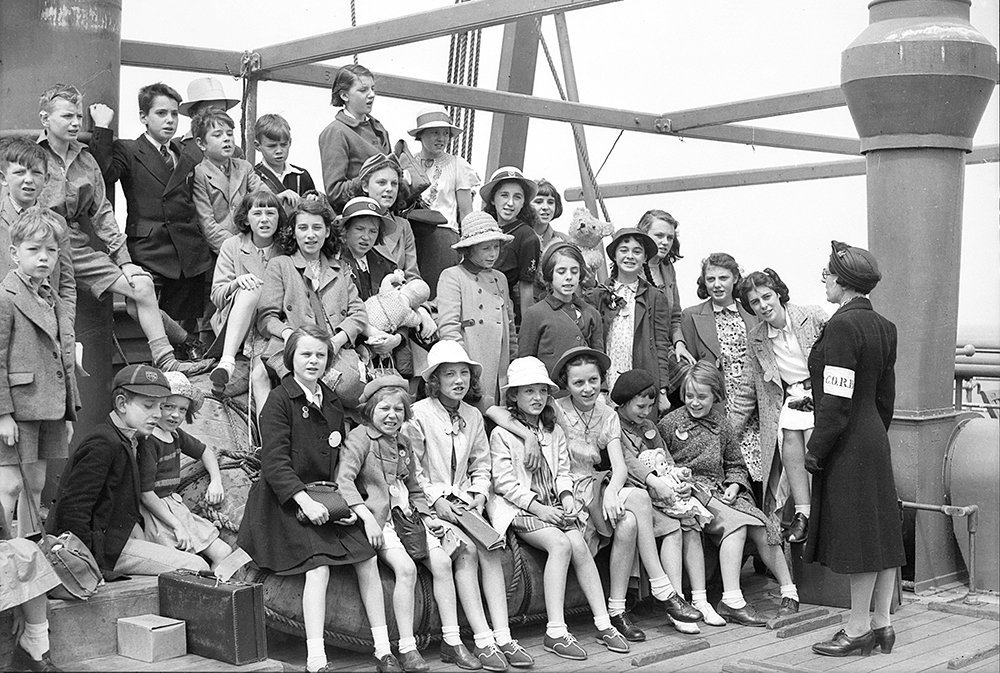
Harold Blair. National Archives of Australia, A1200:L25999 Australian, Meta Maclean, conducts on the Batory, 1940. Image: courtesy Australian War Memorial.
Our family, for
example, has living memory of five generations of pianists. The last four
generations learned piano and played for social gatherings, church, and
personal development. Some are just beginning piano lessons which were
interrupted recently by the pandemic. The art and technology of playing the piano has
transformed in the last 30 years through increasing reliance on digital
connectivity and social networking. The experience of teaching and learning the
piano has potential for change through exploring more possibilities of using
digital technologies. In many ways, digital connectivity and networking occurred
insidiously, without widespread understanding of the cultural shifts and social
transformation that occurred. To date, this theory has not been applied in research literature to formal piano pedagogy, or to informal inter-generational cultural transmission.
Our current dynamics of learning is that we have learned piano from teachers outside the family, but an interest in the piano has been shared informally between daughters, mothers, grandmothers, and great-grandmothers. We are at the point of dialogue about this connection. A community of practice has not yet developed, but there is potential for a music project to begin, if pianists wish to record and reflect on their performances.
Social action has occurred through my private practice and research during the last 10 years. Through Gunnawirra Services, I was commissioned to develop a music webpage for the Tracking the Milky Way website (Kirkwood & Tracey, 2012). This theory applies to the creative processes of developing the music learning modules, "Creating Music Stories" that were used with Indigenous Australian children in 43 preschools in New South Wales. Further reflection and problem-solving occurred through my PhD research with Adrian Miller for: "The impact of new technologies on the musical learning of Indigenous Australian children" (Kirkwood & Miller, 2014).
Further Case Examples
I am inspired by the Grandma playing songs for her Grandson. (Captain DaddyD, 2020). This reveals the uptake in digital technologies within this family, and the Grandmother's willingness to learn popular music repertoire of interest to her Grandson.
The Dunne family
(2008), have produced an inspirational video-recording about their music traditions and history. This was brought to my attention by Bríd Dunne @BridDunneOT, who tweets about her music performances. We both share interest in family music history and Occupational Therapy.
The Transformations Suite, a five movement, one-hour composition examines the life of Martin Luther King by pianist-composer, Samora Abayomi Pinderhughes. In reflecting on his composition, Pinderhughes (2017, 20 January)
states, that the role of the arts in social change is huge. The work combines
piano performance with theatre, song, prose and poetry. The intention
is to empower young folk. Lyrics state, "We shall be changed in the
twinkling of an eye..." As a pianist and composer, Samora Pinderhughes
challenges thinking and raises questions about social justice and identity.
Application to Digital Technologies
One of my early experiences with movie-making technology is captured
through novel experimentation with Dynamic
Network Modelling (Kirkwood, 2013). As I learn to use more digital technologies and experiment with digitisation of our family piano history, I am reminded to dialogue, reflect and negotiate transmission of cultural heritage with family members. Conversations are necessary across generations to understand how cultural diversity, growth of digital networks, and social change impact on society.
Transformational social justice learning theory can be applied to critical reflection on the politics of control in the digital realm. We can choose technologies that are mechanistic (acoustic piano); or use devices for upload / download and recording digital sources and sharing performances. Emancipation can be encouraged through inter-generational dialogues that challenge assumptions. Composing music and songs that we perform in families and communities provides a voice, rather than playing the traditional piano canon. We may share video-recordings of our performances online. Responses may result in further reflection and conversations.
Conclusion
Social learning and cultural transmission occur through our piano performances in the digital and material worlds as we interact with an audience through new technologies in our homes. Teaching and learning occur through cultural nurturing--regardless of our age. Guidance is needed to learn and understand digital technologies and the implications of actions for transmission of our cultural heritage. Inter-generational learning, therefore occurs through our social relations as pianists, through which we can transform our perceptions. We are always learning and growing as pianists. Our social actions have local and global repercussions in a networked digital society.
Author Sandra Jane Kirkwood
Sandra Kirkwood is an Occupational Therapist currently
working in health and rehabilitation. Sandra
founded Music Health Australia, and continues to support the growth and
development of community-based rehabilitation in South-East Queensland.
Qualifications include: Bachelor of Occupational Therapy, Bachelor of Music;
and Master of Philosophy. Sandra is a published author and provides consultancy
and professional development.
The purpose of the digital essay is to prepare for the Australasian Piano Pedagogy Conference, 2021.
References
Australian Government (2013) Creative Australia: National Cultural Policy. https://apo.org.au/sites/default/files/resource-files/2013-03/apo-nid33126.pdf
CaptainDaddyD. (2020, February 19). Grandma plays grandson songs on piano. https://www.youtube.com/watch?v=1ubsuU-G2IU&feature=youtu.be
Collard, S. & Law, M. (1989) The limits of perspective transformation: A critique of Mezirow's theory. Adult Education Quarterly, 39(2), 99-107. https://doi.org/10.1177/0001848189039002004
Duncan, A. (1993). Harold Blair, Australian Dictionary of Biography. http://adb.anu.edu.au/biography/blair-harold-9520
Dunne, M. (2008). Dunne Family https://www.youtube.com/watch?v=ZT2GW1JOBJc
Freire, P. (2005) Pedagogy of the Oppressed, 30th Anniversary ed. Continuum. https://envs.ucsc.edu/internships/internship-readings/freire-pedagogy-of-the-oppressed.pdf
Goldrick, C. (2017, May 17). Snapshot: The singing child evacuees of World War 2. Australian Geographic. https://www.australiangeographic.com.au/topics/history-culture/2017/05/singing-child-evacuees-world-war-two/
Kirkwood, S. (2009) Frameworks of culturally engaged community music practice in rural Ipswich, Australia. PhD thesis, Griffith University. https://doi.org/10.25904/1912/1912
Kirkwood, S. & Tracey, N. (2012). Creating music stories: Tracking the Milky Way music web page. Gunnawirra Service. https://www.youtube.com/watch?v=ZT2GW1JOBJc
Kirkwood, S. (2013). Dynamic modelling of networked school community. https://www.youtube.com/watch?v=xuBCE_NpZq8
Kirkwood, S., & Miller, A. (2014). The impact
of new technologies on the musical learning of Indigenous Australian children. Australasian
Journal of Early Childhood, 39(1), 94-101. https://journals.sagepub.com/doi/abs/10.1177/183693911403900113
Kirkwood, S. (2020) Research portfolio. orcid.org/0000-0003-1770-4656
Australian Government. (2013). National Cultural Policy. https://www.aph.gov.au/About_Parliament/Parliamentary_Departments/Parliamentary_Library/FlagPost/2013/April/Creative_Australia__National_Cultural_Policy_2013
Maclean, M. (1941). The singing ship: An odyssey of evacuee children. Angus & Robertson.
Mezirow, J. (1994). Understanding transformation theory. Adult Education Quarterly. 44(4), pp. 222-232. https://doi.org/10.1177/074171369404400403
Mezirow, J. (2000). Transformative learning. In J. Mezirow (Ed.), Learning as transformation: Critical perspectives on a theory in progress (pp. 1-33): Jossey-Bass.
Pinderhughes, S. (2017, 20 January). The transformation suite. https://www.youtube.com/watch?v=du7Xltk8DRY
Transformative learning blog https://sites.google.com/site/transformativelearning/home
United Nations. (1948). Universal declaration of human rights. https://www.un.org/en/universal-declaration-human-rights/index.html
Vision 2020 Australia (2020). Definition of social justice. https://www.vision2020australia.org.au/events/2019-12-18/world-day-of-social-justice-2/
Wang, V. C. X., & Cranton, P. (2013). Transformative learning and technology in adult and vocational education. International Journal of Information and Communication Technology Education, 9(1), 26-37.
Further Reading
Bang, (2017). Towards an ethic of decolonial trans-ontologies in sociocultural theories of learning and development. In I. Esmonde & A.N. Booker, (Eds.), Power and privilege in the learning sciences: Critical and sociocultural theories of learning (pp. 115-138). Routledge.
Brookfield, S.D. (2000). Transformative learning as ideology critique. In J. Mezirow (Ed.), Learning as transformation: Critical perspectives on a theory in progress (pp. 125-148). Jossey-Bass.
Kitchenham, A. (2008). The evolution of John Mezirow’s transformative learning theory. Journal of Transformative Education, 6(2), 104-123. https://doi.org/10.1177/1541344608322678
Mackinlay, E., & Barney, K. (2014). Unknown and unknowing possibilities: Transformative learning, social justice, and decolonising pedagogy in Indigenous Australian studies. Journal of Transformative Education, 12(1), 54-73. https://doi.org/10.1177/1541344614541170
Mezirow, J. (2003). Transformative learning as discourse. Journal of Transformative Education, 1(1). https://doi.org/10.1177/1541344603252172
Qi, N., & Veblen, K.K. (2016). Transformative learning through music: Case studies from Brazil. Action, Criticism & Theory for Music Education, 15(2), 101-125. act.maydaygroup.org/articles/QiVeblen15_2.pdf
Taylor, E. & Cranton, P. (2013). A theory in progress: Issues in transformative learning theory. European Journal for Research on the Education and Learning of Adults, Vol.4, No.1, 2013, pp. 33-47. http://www.rela.ep.liu.se/article.asp?DOI=10.3384/rela.2000-7426.rela5000
Torres, C.A. (2013). Political sociology of adult education. Springer. https://www.springer.com/gp/book/9789462092273
.
Comments
Post a Comment